Probably Stolen official cover art

Probably Stolen chemistry: caffeine recipe, purity and failed mixtures

Quick answer

For the tested starter caffeine recipe, blend one Coffee Beans item into an empty bottle, add 150 ml from the supplied Mini Alcohol Bottle, heat above the recipe’s 80°C minimum, then switch the plate off. Our run stopped at 92°C. After cooling, we added 6 ml of the supplied Acidic Solution, waited for the protein reaction, filtered through Kotton Fabric, evaporated overnight and used the dry batch in the Chem Finisher. The finished pill tested 62.14% Street Standard. Scan your mixture at each stage: the water percentage at the top of a bottle scan is not its caffeine purity.

Checked 29 Oct 2026 · before patch 100-Rev13 (8 Nov 2026)What changed
How this guide was checked

Coverage: Latest official patches 1.0.0.12 (November 6) and the 100-Rev13 hotfix (November 8) · not retested since. Kingy retail tests: Windows / Steam build 26284217 · 100-REV3 · October 29–30, 2026 UTC. Original water, machine/charging, caffeine, crate/keycard and exchange tests · stamp handbook checked · customer-budget help uses attributed creator footage. Controls, first-day trades, menus and Store Attractiveness checked on build 26525552 (100-REV13), November 9, 2026.. Research checked 29 Oct 2026. Updated 9 Nov 2026

This guide uses the linked sources and any attributed demonstrations. Platform differences and limitations are noted with the advice they affect.

See the 1 sources
1 sources
Clips from 2 creatorsChecked on screen · 9 Nov 202613 steps6 moments · 5:01
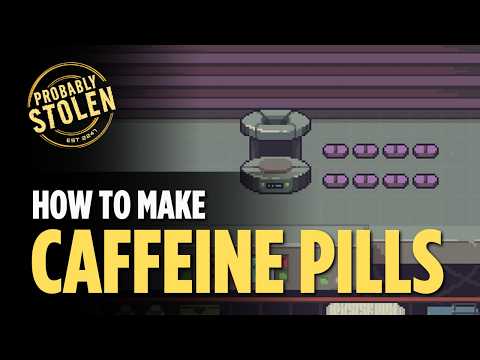
  1. 0:10–0:46Scanning coffee beans and loading the Blender (creator chapter at 0:00)Attach an empty bottle and blend one coffee item · The Lost Noob
  2. 2:38–3:35Adding alcohol to the coffee mush on the Heating Plate (creator chapter at 1:35)Measure the supplied alcohol solution · The Lost Noob
  3. 3:41–5:02Heating the caffeine mixture and switching the plate off (creator chapter at 1:35)Heat using the actual temperature reading · The Lost Noob
  4. 8:44–9:12Evaporating the caffeine batch overnight (creator chapter at 8:34)Evaporate the bottle overnight · The Lost Noob
  5. 9:17–9:50Finishing caffeine pills in the Chem Finisher (creator chapter at 9:14)Finish one pill and measure the result · The Lost Noob
  6. 1:54–3:00The Chemistry Purity Rating page and scanning a reagent (creator chapter at 1:54)What the purity grades mean · Recreational Suffering

See it first · Attach an empty bottle and blend one coffee item ↓

Checked on screen · Nov 9, 2026

0:10–0:46 · 36 sScanning coffee beans and loading the Blender (creator chapter at 0:00)
The Lost NoobFull video ↗
Credits

“How to Make Caffeine Pills - Probably Stolen” by The Lost Noob · Nov 1, 2026 · Release footage uploaded November 1, before update 1.0.0.12; the build number isn't legible in the frames we checked.

Independent creator · no partnership implied

Creator? Ask us to remove this

From coffee to a 62.14% Street Standard pill · 4:58
Silent with explanatory text. Original gameplay at normal speed, with enlarged readings and cuts through waiting. Windows / Steam build 26284217 (100-REV3), Chemist / Mark Up (Normal), Skip Intro, no perks, October 29, 2026. Two complete attempts changed solvent, heating and cleanup together; this is a tested workflow, not a single-variable comparison. Additional recipes and higher purity were not verified. AI-operated and edited; game © Questing Goose Studio / tinyBuild. Video text and evidence.
Why a finished pill can still have low purity · 0:38
Excerpt from the same recordings. Compare the 28.56% baseline pill with the improved run’s 70.62% dry batch and 62.14% finished pill. The water heading is separate from caffeine concentration. The scan and finishing sections below provide the text alternative.

Before you start

  • Tested start: Chemist, Mark Up (Normal), Skip Intro, no perks, not Endless; separate Windows / Steam research runs, days 1–2. Steam build 26284217, visible version 100-REV3, October 29, 2026.
  • Starter Blender, Heating Plate, Evaporator with a sufficiently charged Energy Cell, Chem Finisher, Composition Spectrometer, Chemistry Manual, two empty 750 ml Standard Bottles and a Water Pitcher. Our chemistry module grids were empty.
  • One Coffee Beans item, Kotton Fabric, the supplied Mini Alcohol Bottle and Acidic Solution, 100 ml and 50 ml Graduated Cylinders, plus 5 ml and 1 ml Droppers. Quantities below describe this measured starter batch.
1

How we obtained the instructions and supplies

Choose the Chemist scenario to reproduce this equipment path. Its starting inventory supplied the Chemistry Manual, the four chemistry machines, measuring tools, scanner, coffee, Kotton Fabric and containers. Double-click the manual and read its caffeine page before starting. We used the supplied Shabby equipment without installing Chemical Modules.

On day 1, open the shop and call the Cartel Handler. In both research runs, this first visit supplied Common Chemical Supplies along with three Dream Caps. Collect the supplies from the visitor’s counter before dismissing them, then double-click the package in your inventory to unpack it. The Acidic Solution came from this package; the Mini Alcohol Bottle was supplied with the starting kit. We did not buy additional chemistry equipment or verify a supplier route for other starting scenarios.

The starter kit and handler supplies cost no game credits in these runs. We began with 300 credits and paid 5 for the overnight Power Service, leaving 295. That is a record of this test, not a complete commercial costing or a profit claim.

Sources for this section
2

Read the ingredient line, not the water heading

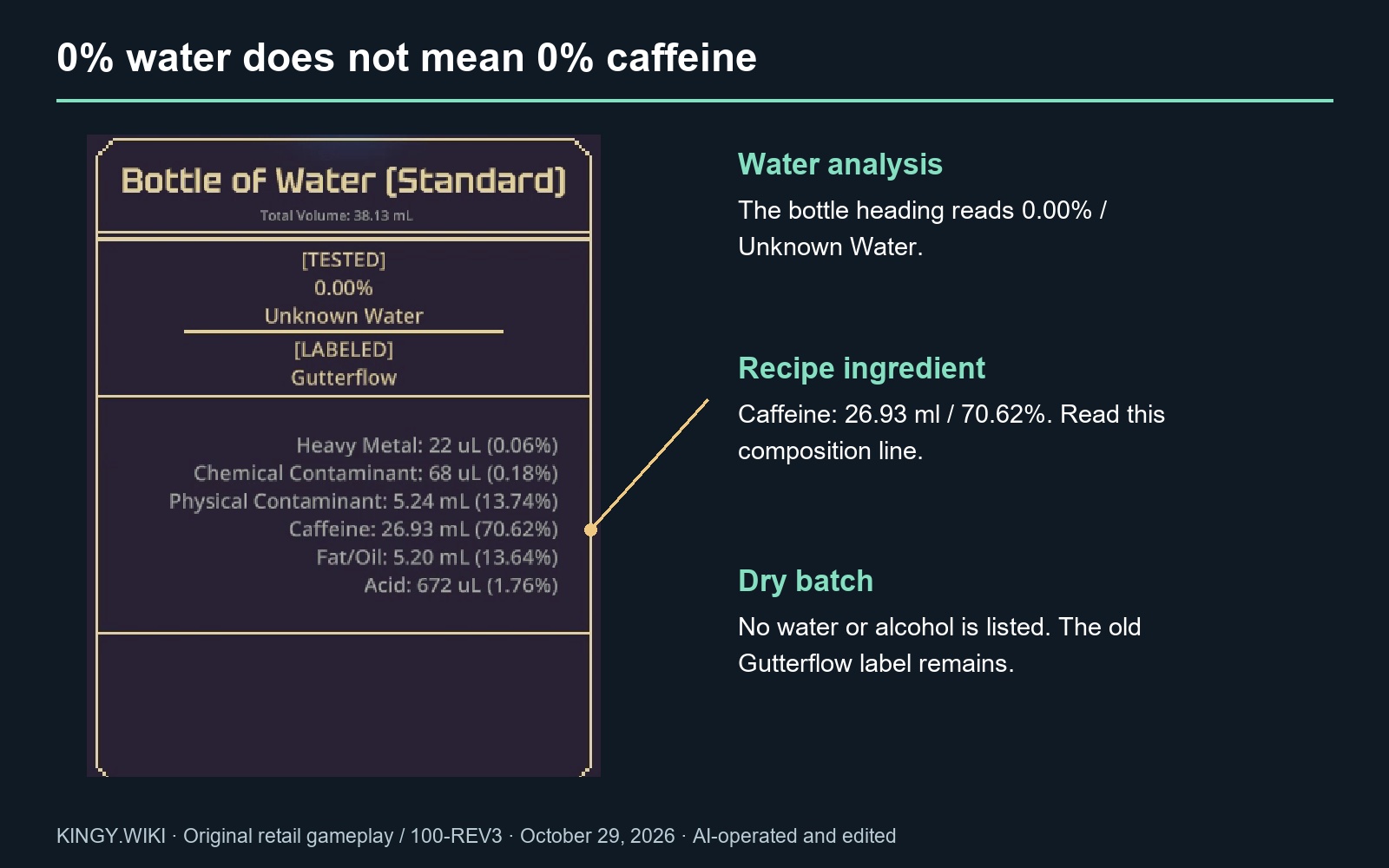
Drag the Composition Spectrometer onto the actual bottle, pitcher or finished pill. A bottle can keep its original name and Gutterflow label throughout the process. After drying, our bottle showed TESTED 0.00% / Unknown Water even though the composition listed 70.62% caffeine. The heading was reporting water quality; the caffeine line was the useful recipe reading.

Compare quantities as well as percentages. Adding solvent diluted the initial caffeine percentage while helping the later extraction. Evaporation increased the percentage by removing water and alcohol, while the absolute caffeine quantity stayed at 26.93 ml. A rising percentage alone does not prove that you created more active ingredient.

Enlarged dry-batch scanner: water heading reads 0.00%, while the caffeine composition line reads 26.93 ml, 70.62%.
Read the named ingredient in the composition list. The water heading and old Gutterflow label do not grade this caffeine mixture.Kingy original retail gameplay, AI-operated and edited · October 29, 2026 · game © Questing Goose Studio / tinyBuild. · Open full-size diagram ↗
Sources for this section
3

1. Attach an empty bottle and blend one coffee item

Checked on screen · Nov 9, 2026

0:10–0:46 · 36 sScanning coffee beans and loading the Blender (creator chapter at 0:00)

Open the caffeine recipe, put the beans in the Blender's INPUT and a bottle in CONTAINER, then press Start.

The Lost NoobFull video ↗
Credits

“How to Make Caffeine Pills - Probably Stolen” by The Lost Noob · Nov 1, 2026 · Release footage uploaded November 1, before update 1.0.0.12; the build number isn't legible in the frames we checked.

Independent creator · no partnership implied

Creator? Ask us to remove this

0:10–0:46Scanning coffee beans and loading the Blender (creator chapter at 0:00)
  1. Double-click the Blender. Drag an empty Standard Bottle into CONTAINER. The dim canister silhouette is a slot placeholder; it is not an attached container. Check that your bottle contains 0 ml.
  2. Drag one Coffee Beans item into INPUT, then click Start. This item is a handful of beans, not a measured millilitre of liquid. Our Shabby Blender displayed 35% content loss and produced 52.00 ml.
  3. Scan the bottle before adding anything else. In both runs it contained 29.12 ml Coffee Bean Mush and 5.20 ml caffeine, alongside water, physical contaminant, protein and fat/oil. If your yield or equipment differs, use your own readings rather than assuming this exact batch.
Initial compositionAmountShare
Water2.08 ml4%
Physical contaminant5.20 ml10%
Caffeine5.20 ml10%
Protein5.20 ml10%
Fat/oil5.20 ml10%
Coffee Bean Mush29.12 ml56%
Sources for this section
4

2. Measure the supplied alcohol solution

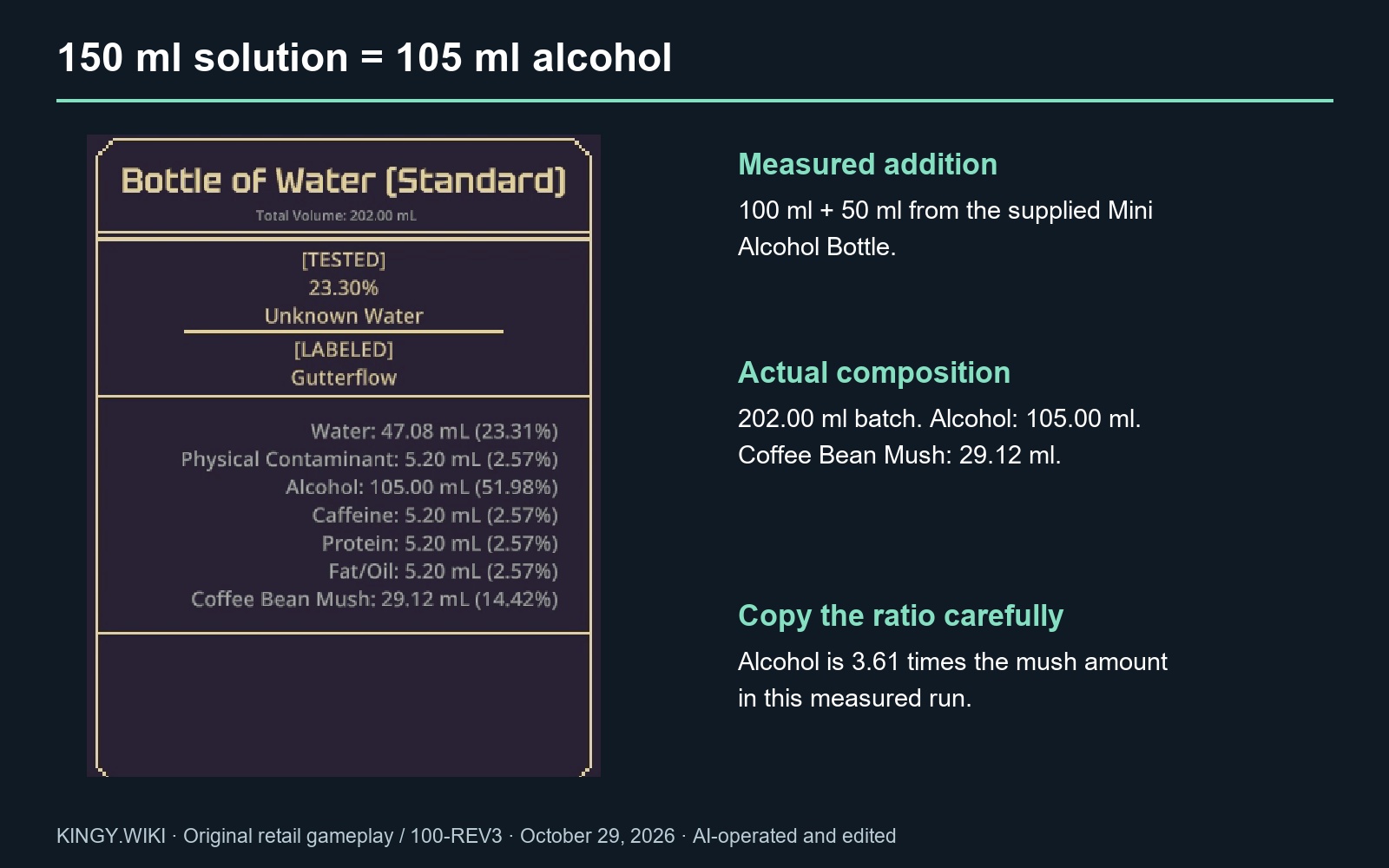
The caffeine page recommends alcohol at roughly three to six times the mush amount. Our measured 105 ml alcohol was about 3.61 times the 29.12 ml mush. The 150 ml bulk solution was not 150 ml of pure alcohol. This distinction matters when copying quantities from a different bottle or run.

The 202 ml preheat batch lists 105 ml alcohol and 29.12 ml Coffee Bean Mush.
150 ml of the supplied solution contributed 105 ml alcohol and 45 ml water. Check actual composition instead of assuming purity.Kingy original retail gameplay, AI-operated and edited · October 29, 2026 · game © Questing Goose Studio / tinyBuild. · Open full-size diagram ↗

Checked on screen · Nov 9, 2026

2:38–3:35 · 57 sAdding alcohol to the coffee mush on the Heating Plate (creator chapter at 1:35)

Pour measured alcohol into the mush and rescan until the alcohol line sits in the recipe's 3–6 times range.

The Lost NoobFull video ↗
Credits

“How to Make Caffeine Pills - Probably Stolen” by The Lost Noob · Nov 1, 2026 · Release footage uploaded November 1, before update 1.0.0.12; the build number isn't legible in the frames we checked.

Independent creator · no partnership implied

Creator? Ask us to remove this

2:38–3:35Adding alcohol to the coffee mush on the Heating Plate (creator chapter at 1:35)
  1. Fill the 100 ml Graduated Cylinder by dragging the supplied Mini Alcohol Bottle onto it. Drag the filled cylinder onto the coffee bottle to pour it in.
  2. Repeat with the 50 ml Graduated Cylinder. The total addition is 150 ml of the supplied solution. Do not add an entire bottle or count the capacity label as the amount actually poured.
  3. Scan again. Our batch now totalled 202.00 ml and contained 105.00 ml alcohol, 47.08 ml water and the original 29.12 ml mush. The supplied solution was therefore 70% alcohol, with water making up the rest.
Sources for this section
5

3. Heat using the actual temperature reading

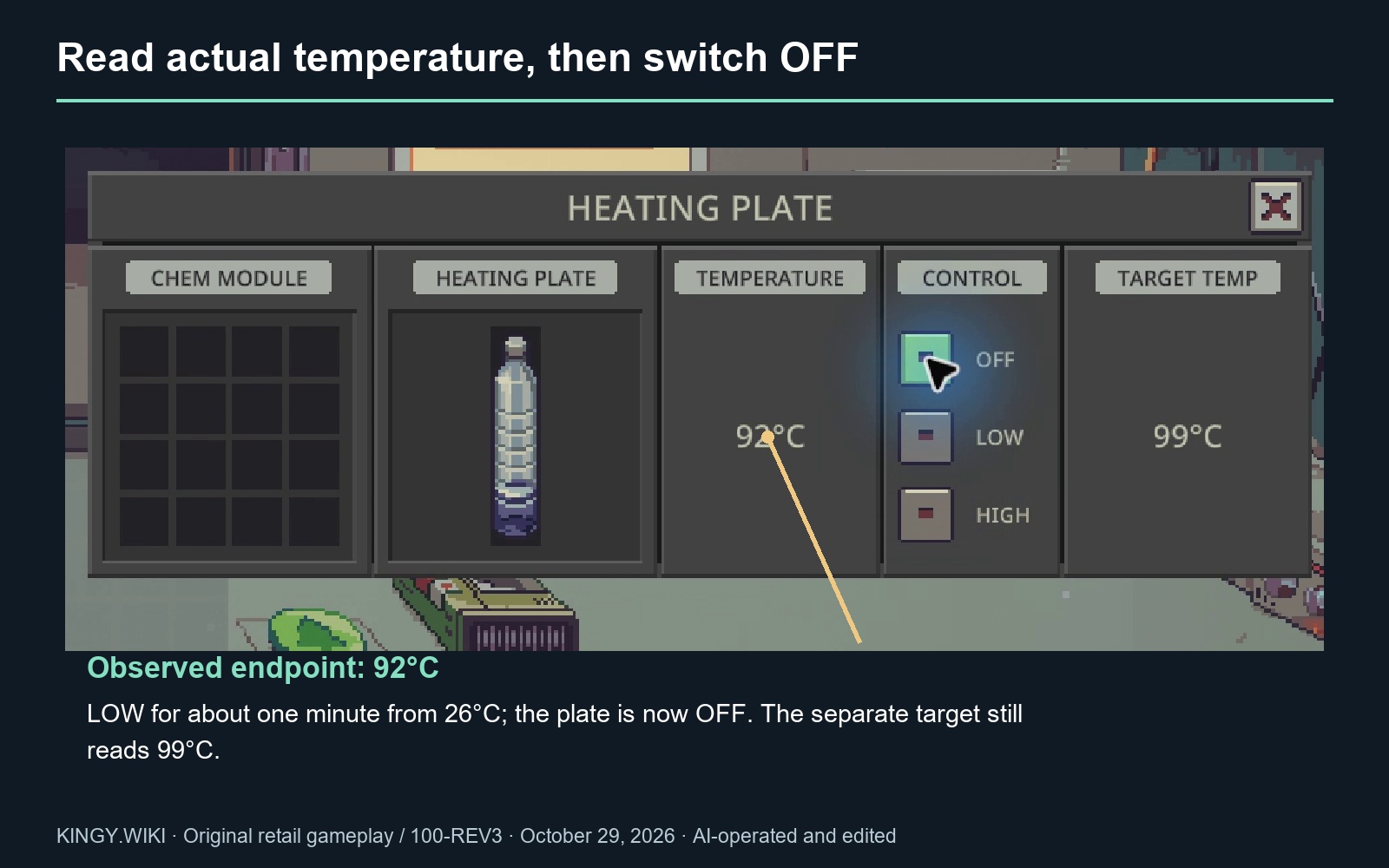
The target display is not the current temperature. Our first attempt stopped at 67°C: the subsequent scan still showed the original 5.20 ml caffeine and 29.12 ml mush. We later heated that separate alcohol-free batch to 90°C, but its caffeine yield was only 7.50 ml. The two full attempts also differed in heating and cleanup, so they do not isolate the effect of alcohol alone.

Actual Heating Plate controls show OFF selected, actual temperature 92°C, target 99°C.
Read the actual-temperature column. The heater was switched off at 92°C; the 99°C target was a separate display.Kingy original retail gameplay, AI-operated and edited · October 29, 2026 · game © Questing Goose Studio / tinyBuild. · Open full-size diagram ↗

Checked on screen · Nov 9, 2026

3:41–5:02 · 81 sHeating the caffeine mixture and switching the plate off (creator chapter at 1:35)

Switch the plate to LOW, watch the actual temperature column rather than the target, and scan before switching it off.

The Lost NoobFull video ↗
Credits

“How to Make Caffeine Pills - Probably Stolen” by The Lost Noob · Nov 1, 2026 · Release footage uploaded November 1, before update 1.0.0.12; the build number isn't legible in the frames we checked.

Independent creator · no partnership implied

Creator? Ask us to remove this

3:41–5:02Heating the caffeine mixture and switching the plate off (creator chapter at 1:35)
  1. Move the bottle into the Heating Plate’s container slot. Our Shabby plate had no Chemical Modules and displayed a locked 99°C target. The separate actual-temperature column started at 26°C.
  2. Switch LOW on and watch the actual temperature. The manual’s caffeine recipe requires at least 80°C. Our recorded run heated for about one minute and reached 92°C before we switched OFF. This is the observed endpoint, not a universal timer or a recommendation for other recipes.
  3. Leave the plate OFF and scan the mixture. Our postheat batch had 26.93 ml caffeine and 7.39 ml Plant Matter; Coffee Bean Mush was no longer listed. Alcohol had fallen from 105.00 ml to 40.64 ml during heating.
  4. Let the batch cool before the next stage. We performed the measured cleanup with the plate OFF, around 26–28°C.
Sources for this section
6

4. React the protein, then filter through Kotton

This is an in-game cleanup step for the measured coffee batch. Six millilitres is our tested addition for 5.20 ml starting protein with that reagent, not a universal dose for arbitrary mixtures. Adding more reagent also adds impurities and can leave excess acid. Kotton Fabric’s tooltip says it strains large chemistry particles and is too coarse for water purification; do not substitute this procedure for the water guide.

  1. Inspect the Acidic Solution tooltip and scan a measured portion. Our supplied reagent clumped protein into filterable debris. Its measured composition was 97.86% acid, with small contaminant amounts. Another research run’s supplied reagent was only 93.9%, so do not assume identical purity.
  2. For this batch, fill the 5 ml Dropper from Acidic Solution and pour it into the cooled coffee bottle. Repeat using the 1 ml Dropper: 6 ml of supplied solution in total.
  3. Allow the reaction to settle and re-scan. Our protein line fell while Insoluble Debris appeared. Do not filter immediately and assume that the reaction has finished. The final filtered scan below had no protein or debris listed.
  4. Double-click the empty Water Pitcher and drag Kotton Fabric into its filter slot. Close that small filter panel. Drag the coffee bottle onto the pitcher to pour the mixture through the installed fabric.
  5. Scan the pitcher, then pour its contents back into the now-empty original bottle. We obtained 125.85 ml containing 26.93 ml caffeine, with no listed Plant Matter, Protein or Insoluble Debris. Physical contaminant, fat/oil, residual acid and trace contaminants remained.
Sources for this section
7

5. Evaporate the bottle overnight

Use the dry CONTAINER bottle for the next step. Do not infer dryness from the label or volume alone; check the composition. The Finisher’s Caffeine Pill option explicitly says it cannot include wet ingredients.

Checked on screen · Nov 9, 2026

8:44–9:12 · 28 sEvaporating the caffeine batch overnight (creator chapter at 8:34)

Put the bottle in the Evaporator's CONTAINER slot, sleep, and scan the next morning to confirm the water and alcohol lines are gone.

The Lost NoobFull video ↗
Credits

“How to Make Caffeine Pills - Probably Stolen” by The Lost Noob · Nov 1, 2026 · Release footage uploaded November 1, before update 1.0.0.12; the build number isn't legible in the frames we checked.

Independent creator · no partnership implied

Creator? Ask us to remove this

8:44–9:12Evaporating the caffeine batch overnight (creator chapter at 8:34)
  1. Open the Evaporator and put the filtered bottle in CONTAINER. We also attached an empty 750 ml Standard Bottle in DISTILLATE; that bottle remained empty in our test, so this guide makes no solvent-recovery claim.
  2. Check the machine’s installed Energy Cell. Our Shabby Evaporator displayed Required Energy 6/day and began at 40/100 kJ, with no modules.
  3. Close the shop after the important visitors, open the end-of-day screen and sleep. We selected Power Service for 5 credits and the free Cartel Protection; cleaning was off. This run did not isolate whether shop power is necessary for this battery-powered device.
  4. The next morning, scan the CONTAINER bottle. Ours had fallen from 125.85 ml to 38.13 ml; water and alcohol were no longer listed. Caffeine remained 26.93 ml, now 70.62% of the dry mixture. The cell was 34/100 kJ.
Sources for this section
8

6. Finish one pill and measure the result

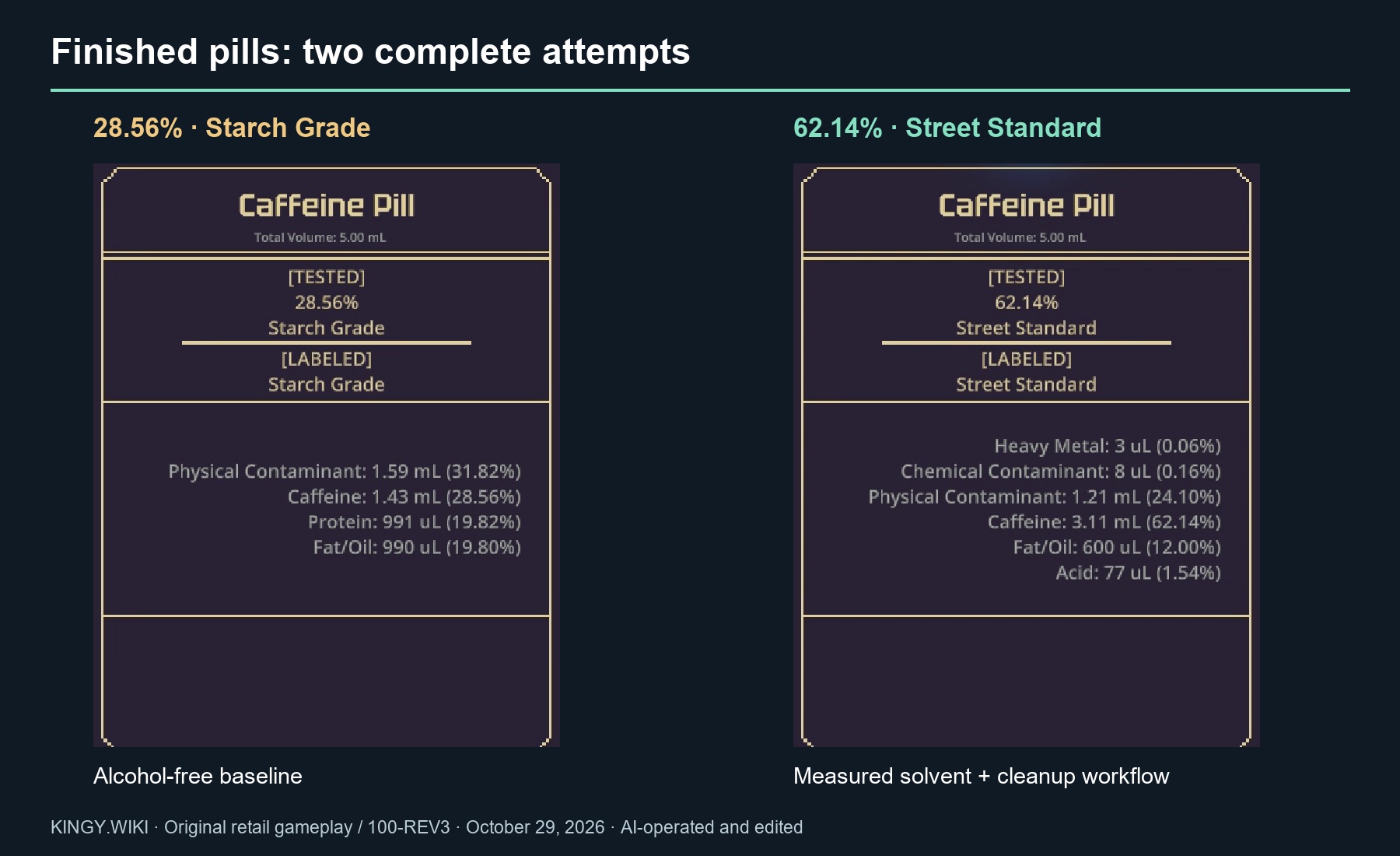
The starter Finisher did not preserve the bottle’s 70.62% concentration: the finished pill was 62.14%, with physical contaminant at 24.10% and fat/oil at 12.00%. The manual says Chemical Modules can reduce impurities introduced during finishing, but we did not test an upgraded configuration or establish a universal loss percentage. Packaging a weak batch does not purify it.

Original final-pill scans compare 28.56% Starch Grade from the baseline with 62.14% Street Standard from the improved workflow.
Separate complete attempts with different solvent, heating and cleanup. This demonstrates a working improved workflow, not a controlled single-variable experiment.Kingy original retail gameplay, AI-operated and edited · October 29, 2026 · game © Questing Goose Studio / tinyBuild. · Open full-size diagram ↗

Checked on screen · Nov 9, 2026

9:17–9:50 · 33 sFinishing caffeine pills in the Chem Finisher (creator chapter at 9:14)
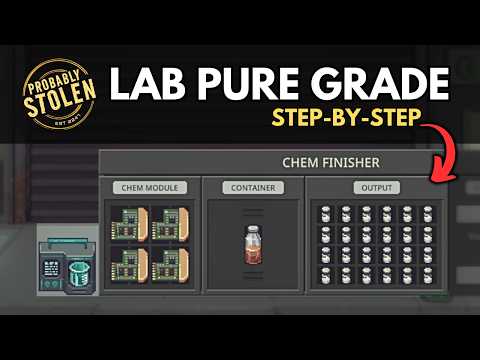
Choose Caffeine Pill under Configure, insert the dry bottle, press Output, then scan a pill to read its grade.

The Lost NoobFull video ↗
Credits

“How to Make Caffeine Pills - Probably Stolen” by The Lost Noob · Nov 1, 2026 · Release footage uploaded November 1, before update 1.0.0.12; the build number isn't legible in the frames we checked.

Independent creator · no partnership implied

Creator? Ask us to remove this

9:17–9:50Finishing caffeine pills in the Chem Finisher (creator chapter at 9:14)
  1. Double-click the Chem Finisher, click Configure and select Caffeine Pill. The menu specifies 5.00 ml required volume and no wet ingredient. Close the selection window after choosing it.
  2. Move the dried bottle into CONTAINER. Wait for Status: Ready, leave output space and click Output once. Our click produced one pill and used 5 ml of the mixture.
  3. Drag the Composition Spectrometer onto the finished pill. Our 5.00 ml Caffeine Pill tested 62.14% Street Standard, and its label matched. Its estimated/base value was 10 game credits; we did not sell it.
Sources for this section
9

Measured checkpoints from the successful run

Scanner numbers are rounded. Values describe the actual test and may differ with source ingredients, condition, modules or processing time. We produced and scanned one pill from the successful batch; this is not a verified total-pill-yield or income projection.

StageTotal mixtureCaffeineWhat changed
Blended coffee52.00 ml5.20 ml / 10.00%29.12 ml mush present
After 150 ml supplied solution202.00 ml5.20 ml / 2.57%105.00 ml alcohol present
After heating / OFF at 92°C137.64 ml26.93 ml / 19.56%7.39 ml Plant Matter; alcohol 40.64 ml
After reaction and Kotton125.85 ml26.93 ml / 21.40%No protein, plant matter or debris listed
After one Evaporator night38.13 ml26.93 ml / 70.62%No water or alcohol listed
One finished pill5.00 ml3.11 ml / 62.14%Street Standard; remaining mixture retained
Sources for this section
10

Why the mixture fails or finishes at low purity

The earlier baseline still produced a pill, so it was a quality failure rather than a completely nonfunctional machine. Its dry batch was 32.47% caffeine before finishing. A later reagent cleanup did not turn it into a high-grade product. Avoid promising a rescue until you scan the actual finished output.

SymptomWhat to check
Blender refuses the ingredientAttach a real liquid container. The canister silhouette is only a placeholder.
Coffee remains mushRead the actual temperature and recipe minimum. Our 67°C attempt left the starting composition unchanged.
Caffeine percentage falls after adding solventCheck its absolute amount. Our unchanged 5.20 ml became a smaller fraction of a 202 ml batch.
Bottle reads 0% / Unknown Water after dryingRead the caffeine composition line. Our 0% water heading accompanied 70.62% caffeine.
Finisher says wet ingredientRe-scan for water/alcohol and verify the overnight Evaporator setup before finishing.
Kotton does not remove everythingIt removed plant matter and reacted debris in this run; physical contaminant, fat/oil and residual acid remained.
Finished pill is lower grade than the dry bottleThe starter Finisher introduced impurities. Scan the output; Ready is not a purity guarantee.
An alcohol-free batch became Starch GradeOur baseline made 28.56% pills. Adding cleanup later improved it only to 34.54% Junk Grade. The fresh measured solvent/heating/cleanup workflow reached 62.14%.
Sources for this section
11

What the purity grades mean

The retail Chemistry Manual describes these bands and value adjustments. They are handbook reference, separate from our measured outcomes. Our runs independently reached Starch Grade, Junk Grade and Street Standard; the higher grades below were not produced. Treat the displayed grade as the authority at a boundary, since the scanner rounds percentages.

Checked on screen · Nov 9, 2026

1:54–3:00 · 66 sThe Chemistry Purity Rating page and scanning a reagent (creator chapter at 1:54)

Compare your product's scanned purity with the manual's grade bands before pricing it.

Recreational SufferingFull video ↗
Credits

“Make Lab Pure Drugs Every Time in Probably Stolen” by Recreational Suffering · Nov 8, 2026 · Release footage uploaded November 8, two days after update 1.0.0.12; we can't tell from the frames whether it was recorded before or after that update.

Independent creator · no partnership implied

Creator? Ask us to remove this

1:54–3:00The Chemistry Purity Rating page and scanning a reagent (creator chapter at 1:54)
Manual bandPurityListed base-value adjustment
Starch GradeUnder 30%−95%
Junk Grade30–45%−75%
Cut Product45–60%−45%
Street Standard60–80%No listed bonus
Near Pharma80–90%+40%
Pharma Grade90–99%+85%
Pure Grade99%++135%
Sources for this section
12

Video text and evidence

The main demonstration and troubleshooting short are silent, with explanatory text burned into the picture. Original gameplay runs at normal speed; waiting and repeated inspection are cut. The complete text alternative and source timestamps are available below. The VTT contains the same explanatory text, not speech subtitles; avoid displaying it as a second overlay on the burned-in export.

Read the complete video text

Download timed explanatory text

Inspect measurements, source footage and limits

Sources for this section
13

Build, evidence and limits

Tested October 29, 2026, in the purchased Windows / Steam game, installed build 26284217, visible version 100-REV3. Two separate Chemist / Mark Up (Normal) / Skip Intro research runs, no perks, days 1–2. Existing user saves were backed up and were not edited. All chemistry names, volumes and temperatures on this page describe the fictional game’s UI and mechanics.

The demonstrated recipe starts with the Chemist kit and first handler package. We verified one completed Street Standard caffeine pill, an alcohol-free low-grade baseline, an under-temperature failure, reaction/filtering and overnight evaporation. We did not verify any additional recipe, higher purity, upgraded chemistry module, ingredient supplier outside this start, sales or profitability.

The two full attempts changed solvent, heating and cleanup together; they support the improved procedure, not an isolated causal percentage for each change. Handbook-only statements are identified in their sections. Community questions informed the research, while the published recipe quantities and outcomes come from the original recordings.

Sources for this section

You’re ready when…

Your checklist

0 of 6 complete · Loading saved progress…

Did this answer your question?

Sources · 1Walkthrough · checked 29 Oct 2026 · Research checked 29 Oct 2026
Kingy starter chemistry test: caffeine from beans to Street Standard ↗First-hand retail100-REV3 / build 26284217, ChemistNormal no perks. Original manual, exact52ml coffee/150ml supplied solution/6ml reagent workflow, OFF92C, Kotton, overnight evaporation,62.14%StreetStandard finished pill; baseline28.56%Starch. Two full attempts, not a one-variable experiment. AI-operated and edited; source ranges in evidence JSON.Walkthrough ·

Stuck? Tell us where

Say where you’re stuck in Probably Stolen. You get one hint at a time from a published kingy.wiki guide, and the answer and its clip stay covered until you ask.

If nothing matches, we keep your words (without emails, links or long numbers) to decide which answers to write next. Privacy